Where Recruitment Agencies Should Post in 2026, What to Publish and When
Nicole Clarke • July 27, 2026
Recruitment agencies are not short of things to say.
Every day, recruiters hear why candidates are rejecting offers, which salaries are moving, what employers are getting wrong, where skills are running short and why supposedly brilliant vacancies are attracting nobody.
That is valuable information.
Yet most of it disappears into telephone calls, inboxes, meetings and ATS notes. Then someone remembers the company LinkedIn page has been quiet and posts a job advert, an award photo or a motivational quote about Mondays.
We can do better.
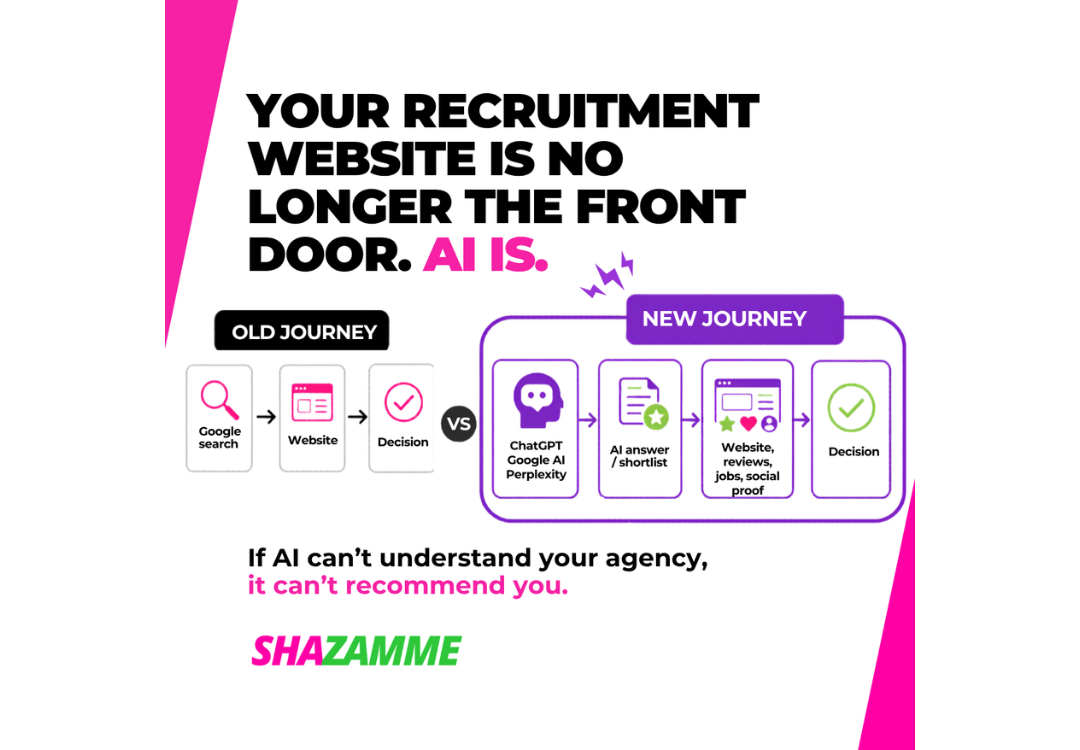
New research from Meltwater gives recruitment and staffing businesses a very good reason to take content more seriously. After analysing 9.5 million citations across six major AI models, Meltwater found LinkedIn was the second most cited source for business-related AI answers, behind only YouTube.

LinkedIn’s share of AI citations grew by 26% during the four-week study. More importantly, 75% of those LinkedIn citations came from individual member profiles rather than company pages.
That means content published by recruiters, founders, consultants and subject matter experts may influence the answers people receive when they ask AI tools questions such as:
- Who are the best healthcare recruitment agencies in Australia?
- What should I look for in an executive search firm?
- What is the average salary for a construction manager in London?
- Why are candidates rejecting our job offers?
- Which recruitment agency specialises in cybersecurity roles in New York?
This does not mean every recruiter needs to become a full-time influencer.
It means the useful knowledge inside a recruitment business needs to stop hiding.
Why LinkedIn matters for recruitment and AI search
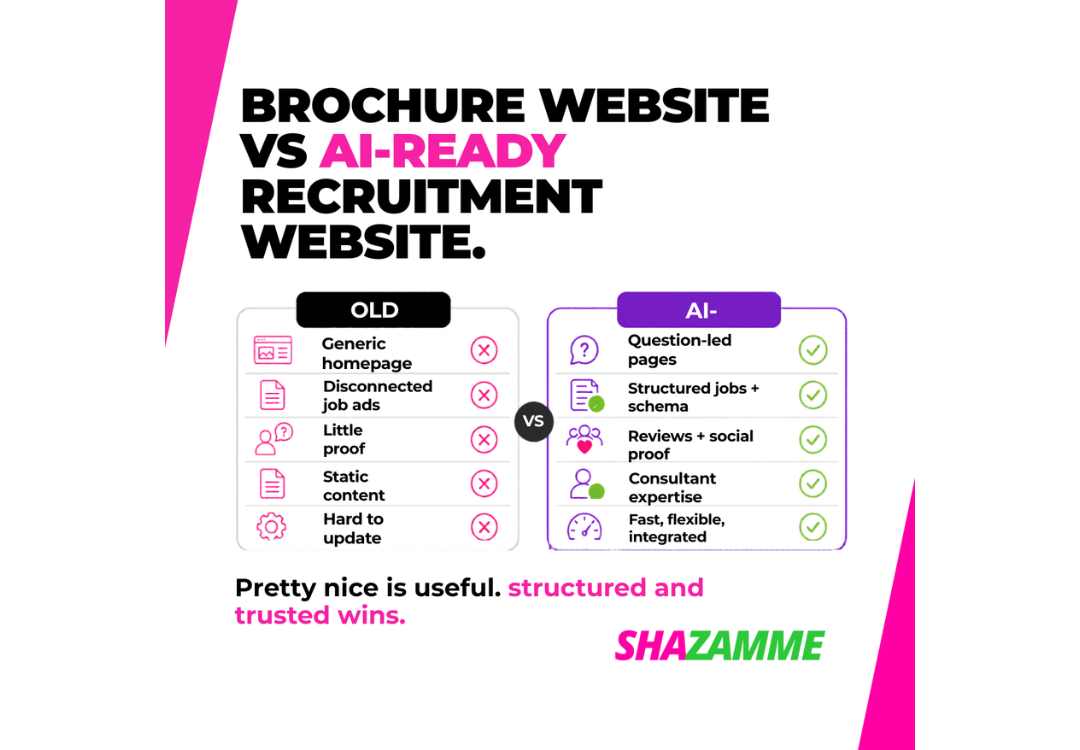
The Meltwater research found that articles and plain-text posts accounted for 83% of LinkedIn content cited by AI systems.
Every top-cited article in the study used a numbered or bulleted structure, while 92% used clear headings. Content containing specific names, prices, statistics and direct answers was more likely to be referenced than broad, generic thought leadership.
Freshness mattered too.
Seventy-two percent of the cited content was original rather than reshared, and 48% had been published within the previous three months. Only 12% was more than a year old.
There are three fairly obvious lessons here.
Let your experts speak
The company LinkedIn page still matters, but it should not be expected to carry the entire strategy.
Clients and candidates want to hear from people who understand their markets.
That might be:
- A healthcare recruiter explaining why nurses are rejecting permanent roles
- An executive search consultant discussing succession planning
- A construction specialist sharing contractor-rate movements
- A technology recruiter explaining changes in cybersecurity hiring
- A staffing leader challenging an outdated industry practice
You do not need to be famous.
You need to be specific, credible and useful.
Answer real questions
Do not start with, “What shall we post this week?”
Start with a question someone has genuinely asked.
For example:
- How long should it take to hire a software engineer?
- Why are warehouse workers leaving within 90 days?
- Should salaries be included in job adverts?
- How much does executive search cost?
- What qualifications does a registered nurse need to work in the UK?
- What should a recruitment website include?
- Retained search or contingent recruitment: which is right for this role?
Questions create useful content.
“Talent trends” is not a question. It is usually a warning that nobody has worked out what the article is about yet.
Add something only you know
Google’s current guidance for generative AI search says websites should publish useful, original, people-first content with a genuine point of view. Google specifically advises against simply recycling what already exists online or producing commodity articles that could have come from anybody.
This is good news for recruitment businesses because they sit on enormous amounts of firsthand market knowledge.
Use it.
Instead of writing:
- Five tips for attracting better candidates
Write:
- We reviewed 63 rejected offers. Here are the four problems employers kept missing.
The second version contains experience, evidence and intrigue.
The first could have been written by a toaster.
Your website should be the centre of the strategy
I often lead with a video on LinkedIn because that is where the conversation starts quickly.
But I want the full website page ready before I press publish.
Why?
Because a social post is temporary.
Someone may see it today, engage with it tomorrow and never find it again. You do not control how widely it is distributed or how long it remains visible.
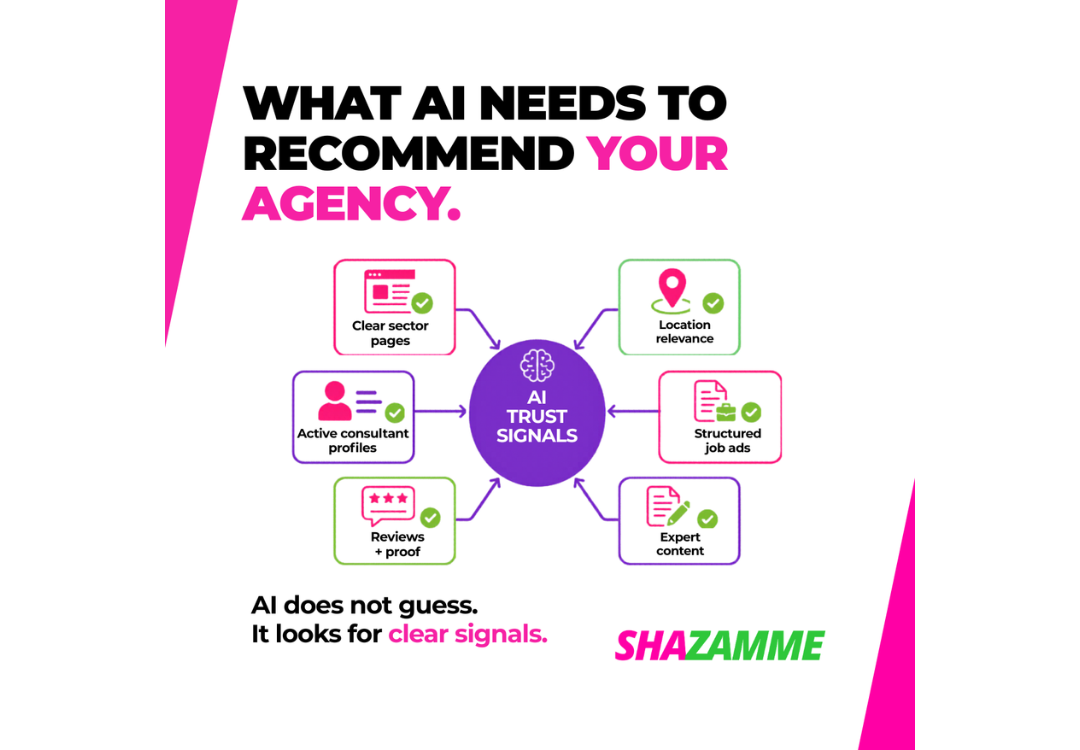
Your website is where the complete article, video, evidence, related services, consultant information, jobs and next steps should live.
The website version should include:
- A direct answer near the beginning
- A clear page title
- Logical headings
- Original insight
- Relevant data and examples
- Practical recommendations
- A named author
- A publication or updated date
- Related questions and answers
- Internal links to relevant services, sectors, jobs and consultants
- A clear next step for the reader
Google says the same foundational SEO principles continue to apply to AI Overviews and AI Mode. Important content should be available as text, easy to find through internal links and supported by relevant images and video where appropriate. Business Profile information should also be kept current.
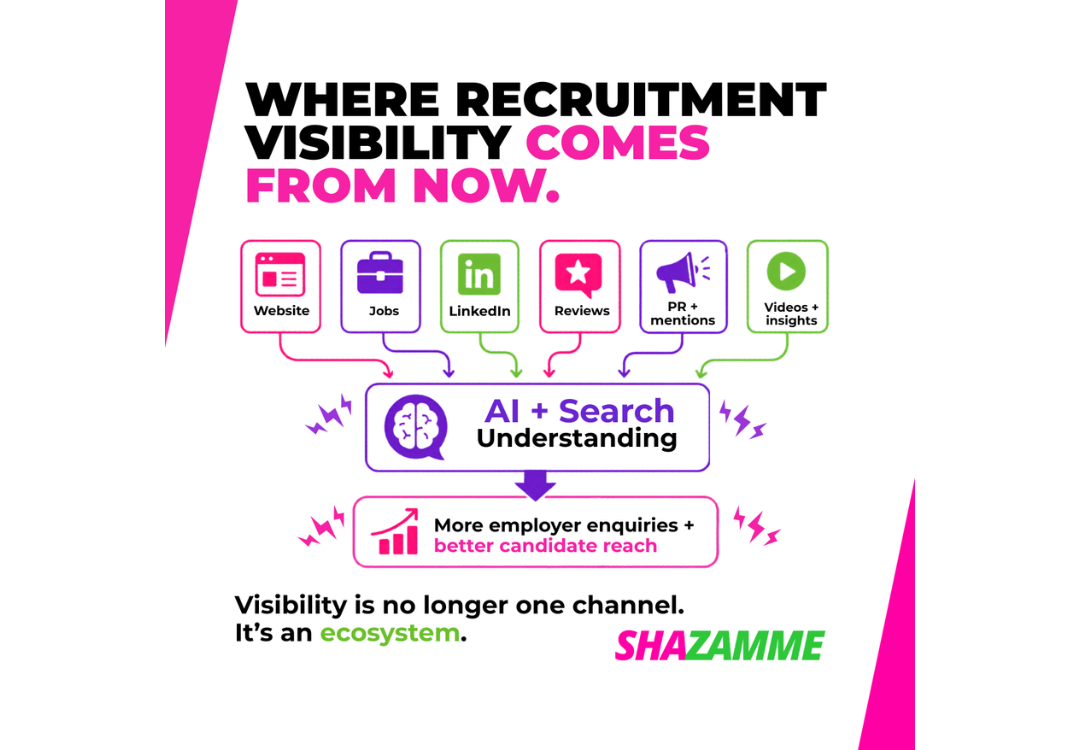
This is why social content should feed your website rather than replace it.
Where should recruitment agencies post?
There is no single best platform for every recruitment business.
An executive search firm, a nursing agency and a warehouse staffing company do not have the same audience.
Trying to run the same content strategy across all three is like prescribing the same medication because everybody technically has a body.
Use the platform that suits the person you need to reach.
Best Used For
Client acquisition, thought leadership, executive search, and reaching professional candidates.
Recommended Content
Expert insights, market analysis, videos, case studies, and decision guides.
Recommended Posting Time
Start by testing Wednesday at 4:00 PM or Friday between 3:00 PM and 4:00 PM.
YouTube
Best Used For
Searchable advice, webinars, interviews, and in-depth industry discussions.
Recommended Content
Long-form videos, educational guides, market updates, and candidate education.
Recommended Posting Time
Start by testing Sunday at 10:00 AM.
YouTube Shorts
Best Used For
Quick answers, increasing recruiter visibility, and short educational content.
Recommended Content
One practical insight, frequently asked question, or useful tip per video.
Recommended Posting Time
Start by testing Friday at 4:00 PM, 6:00 PM, or 7:00 PM.
Best Used For
Local recruitment, healthcare, logistics, trades, hospitality, and industrial sectors.
Recommended Content
Job opportunities, local updates, workplace content, candidate stories, and practical career advice.
Recommended Posting Time
Start by testing Tuesday or Wednesday between 12:00 PM and 8:00 PM.
Best Used For
Building employer brand awareness, showcasing workplace culture, recruiter personalities, and engaging early-career audiences.
Recommended Content
Reels, behind-the-scenes project footage, workplace previews, and visual career advice.
Recommended Posting Time
Start by testing Tuesday afternoon or Wednesday afternoon and evening.
Email Marketing
Best Used For
Client nurturing, candidate re-engagement, event invitations, reports, and market updates.
Recommended Content
Segmented, insight-driven email campaigns tailored to each audience.
Recommended Sending Time
Start by testing Tuesday to Thursday at approximately 10:00 AM.
Google Business Profile
Best Used For
Building local credibility, improving branded search visibility, collecting reviews, promoting events, and increasing local awareness.
Recommended Content
Business updates, services, awards, events, and recruitment campaigns.
Recommended Posting Frequency
Publish consistently, ideally at least once per week.
Website
Best Used For
Improving search visibility, generating enquiries, and creating long-term content value.
Recommended Content
Articles, industry pages, guides, videos, case studies, and frequently asked questions.
Recommended Publishing Schedule
Publish new website content before or alongside the first supporting social media campaign.
These times are starting points, not holy scripture.
Buffer’s 2026 analysis of 4.8 million LinkedIn posts found that late afternoon and evening engagement had become stronger, with Wednesday at 4pm and Friday between 3pm and 4pm producing the highest results.
Sprout Social’s broader analysis of nearly two billion engagements found that Tuesday and Wednesday between 11am and 6pm performed well across social platforms. Its data is expressed in the audience’s local time.
A global audience is not one audience.
It is several audiences in several time zones. Schedule your priority content for the countries and regions where you want to win business.
How recruitment agencies should use LinkedIn
LinkedIn should be a priority for recruitment companies targeting employers, executives and professional candidates.
But stop making the company page do all the work.
The strongest content should usually begin with the person who has the experience or opinion.
That could be the founder, a recruiter, a sector leader or a consultant.
What recruiters should post on LinkedIn
Useful LinkedIn content includes:
- Market observations
- Salary and rate movements
- Hiring mistakes
- Candidate behaviour
- Changes in skills demand
- Lessons from recent assignments
- Interview and offer-stage problems
- Client decision guides
- Candidate advice
- Strong opinions supported by experience
Open with the most interesting point.
Weak opening:
In today’s rapidly changing recruitment landscape, attracting top talent is increasingly difficult.
Stronger opening:
We reviewed 47 rejected healthcare offers. Salary was not the main problem.
The second version makes a clear promise.
The first says nothing in a very professional voice.
Should recruitment agencies post jobs on LinkedIn?
Yes, but jobs should not dominate the content.
A page filled entirely with vacancies gives employers little evidence that your agency understands hiring strategy. It also gives passive candidates few reasons to follow you unless they are actively looking at that exact moment.
Use jobs as one part of a broader mix that also demonstrates expertise, people, market knowledge and proof.
How often should recruiters post on LinkedIn?
For most recruitment consultants, two or three worthwhile posts each week is a practical starting point.
This is enough to build consistency without forcing people to manufacture opinions about absolutely everything.
The company page can support those posts with:
- Case studies
- Major company news
- Research
- Events
- Reports
- Awards
- Product or service updates
- Consultant content
- Employer-brand campaigns
Do not give ten employees the same caption and ask them all to post it.
That is not employee advocacy. It is a very visible hostage situation.
How recruitment agencies should use YouTube
YouTube was the most cited platform in Meltwater’s AI-search study, ahead of LinkedIn.
Recruitment businesses should not treat it as a dusty storage cupboard for old webinar recordings.
YouTube is useful for:
- Hiring-manager education
- Candidate advice
- Market reports
- Salary discussions
- Consultant interviews
- Sector updates
- Webinar recordings
- Role and workplace previews
- Frequently asked questions
- Event and conference content
Buffer’s analysis of 1.8 million YouTube videos found Sunday at 10am was the strongest time for long-form video. YouTube Shorts performed best on Fridays, particularly at 4pm, 6pm and 7pm. These times apply in the audience’s local time.
Again, use this as a testing point rather than a guarantee.
How to optimise recruitment videos for YouTube
Use the question people are searching for in the title.
Weak title:
Nicole’s Recruitment Update: Episode 14
Better title:
Why Good Candidates Reject Job Offers: Seven Problems Employers Can Fix
The title should make sense to somebody who has never heard of you.
Add:
- A detailed video description
- The relevant sector and location
- Links to the full website resource
- Video chapters for longer content
- A clear thumbnail
- Captions
- A useful next step
Embed important videos into the relevant website article.
Google recommends using relevant video alongside written content and says videos can appear across its main search results, video results, images and Discover.
One video can therefore support LinkedIn visibility, YouTube discovery and the authority of the website page.
Much better than letting it die in the LinkedIn feed after 48 hours.
How recruitment agencies should use Facebook and Instagram
LinkedIn is not automatically the best place to attract every type of candidate.
Facebook can be extremely useful for:
- Healthcare recruitment
- Blue-collar staffing
- Warehouse and logistics roles
- Trades
- Hospitality
- Industrial recruitment
- Local candidate communities
- Referral campaigns
Sprout Social’s 2026 data found that Facebook engagement was strongest on Tuesdays and Wednesdays between midday and 8pm.
Facebook groups can also work, but contribute something useful.
Dropping the same vacancy into 37 local groups is not community engagement. It is digital flyposting.
Instagram suits more visual content, including:
- Construction projects
- Healthcare workplaces
- Office environments
- Employer-brand content
- Recruiter introductions
- Interview advice
- Day-in-the-life videos
- Graduate and early-career recruitment
Sprout Social found strong Instagram engagement during midweek afternoons and evenings, including Tuesdays between 1pm and 7pm and Wednesdays from midday into the evening.
Always add subtitles to short videos.
Many people will first watch with the sound off, often while pretending to pay attention to something else.
How recruitment agencies should use Google Business Profile
Google Business Profile is regularly ignored by recruitment businesses.
That is odd, considering it can be highly visible when somebody searches for your company, office or local services.
Use it to publish:
- Local market updates
- Events and webinars
- Salary guides
- Awards
- New services
- Hiring campaigns
- Office news
- Useful website articles
Google allows businesses to publish updates and manage social links through their Business Profiles. Reviews appear alongside the profile in Search and Maps, and businesses can create a direct link or QR code to request them.
Keep your:
- Address
- Phone number
- Website
- Opening hours
- Social profiles
- Images
- Services
accurate and consistent.
Ask satisfied clients and candidates for genuine reviews, then respond to them.
A business can spend a fortune on a brand refresh and still have a Google profile displaying an old address and a blurry office photograph uploaded in 2017.
It happens more than it should.
Turn every strong content idea into an email campaign
Email is where your content moves from public attention into an audience you can build a relationship with.
Do not send:
We have published a new blog. Click here to read it.
Nobody has been waiting beside their inbox for news of your blog.
Lead with the insight.
For example:
We reviewed 47 healthcare offers that candidates rejected. Only nine were mainly about salary. The larger problem started much earlier in the hiring process.
Give readers one or two useful findings, then link to the complete article or video.
Mailchimp’s data identifies Tuesday, Wednesday and Thursday as sensible days to test, with 10am in each recipient’s local time providing a useful starting point. Mailchimp also stresses that your own audience data should ultimately determine the timing.
Segment recruitment emails properly
Your database is not one giant person.
Separate communications by factors such as:
- Employer or candidate
- Sector
- Location
- Job family
- Seniority
- Previous engagement
- Active or passive status
- Client relationship
- Content interest
A chief executive researching succession planning should not receive the same follow-up as a warehouse worker who applied for a night shift.
This should be obvious.
Unfortunately, many disconnected marketing systems still treat them exactly the same.
What recruitment agencies should publish to attract clients
Client-acquisition content should help employers make better hiring decisions.
Job adverts do not do that.
Awards can support credibility, but a company cannot build an entire client-acquisition strategy around repeatedly congratulating itself.
Publish specific market intelligence
Cover:
- Salary movements
- Contract rates
- Candidate availability
- Hiring times
- Offer acceptance
- Skills shortages
- Regional differences
- Changing expectations
Avoid producing another enormous salary guide that tries to cover every job in every location.
Specific content is more useful.
Compare:
2026 Salary Guide
with:
What Finance Directors Are Being Offered by Mid-Market Companies in Melbourne
The second article has a clear reader and purpose.
The first is the beige cardigan of recruitment content. Perfectly respectable, but nobody is going to stop in the street to ask where you got it.
Explain what employers are getting wrong
Useful subjects include:
- Slow interview processes
- Weak job descriptions
- Unrealistic salary expectations
- Too many interview stages
- Delayed feedback
- Poor candidate communication
- Unclear role briefs
- Counteroffer risk
- Weak onboarding
Real thought leadership does not agree with everything a potential client does.
Sometimes the most useful thing a recruiter can say is:
Your hiring process is causing the problem.
Create decision guides
Publish content that helps buyers compare options:
- Retained search versus contingent recruitment
- Recruitment agency versus internal hiring
- How to select an executive search firm
- When to use an RPO
- How to review a staffing supplier
- What a recruitment website should include
- How an ATS integration should work
- What employers should expect from a recruitment partner
Decision guides align with the questions buyers ask search engines and AI tools.
They also create natural opportunities to explain how your service differs.
Show proof with proper case studies
A useful recruitment case study explains:
- The client’s original problem
- Why it mattered
- What the agency changed
- How the work was delivered
- The measurable outcome
- What others can learn
“Another happy client” is not a case study.
It is a caption.
What recruitment agencies should publish to attract candidates
Candidate content should provide clarity.
Candidates want to know:
- What will I be paid?
- Where is the role?
- What are the working hours?
- What experience do I need?
- What will the interview involve?
- Who will I be speaking with?
- What happens after I apply?
- Will anybody actually respond?
Useful candidate content includes:
Practical role and market advice
Explain salaries, licences, qualifications, shifts, hiring demand, interview stages and career pathways.
Realistic workplace previews
Show the environment, team, site, project, equipment or working conditions where appropriate.
This is especially useful in healthcare, construction, logistics, manufacturing and hospitality.
Visible recruiters
Let candidates see and hear from the person who may represent them.
A short video from a credible recruiter can build more confidence than a generic “meet the team” page containing 25 small headshots.
Clear process information
Explain what happens after a candidate registers or applies.
Set expectations around:
- Contact times
- Documentation
- Interviews
- Feedback
- Compliance
- Next steps
Silence damages trust.
Clarity does not require a revolutionary technology breakthrough. It requires telling people what is going on.
Content strategies for different recruitment sectors
Executive search
Prioritise:
- Individual LinkedIn thought leadership
- Detailed website articles
- Segmented email
- Market reports
- YouTube interviews
- Private briefings and roundtables
Strong subjects include succession planning, leadership assessment, remuneration, board appointments and the reasons senior hires fail.
Post less if necessary, but make every piece count.
Senior executives do not need seven motivational posts a week. They need one genuinely useful perspective on a problem they recognise.
Healthcare recruitment
Prioritise:
- Facebook and Instagram
- Profession and location pages
- Short video
- YouTube guides
- Google Business Profile
- Candidate email
- LinkedIn for employer and workforce content
Cover registration, credentialing, relocation, shifts, pay structures, wellbeing and regional demand.
Make practical information easy to find. Healthcare candidates may be comparing several opportunities and agencies at once.
Construction recruitment
Prioritise:
- Site and project videos
- Trade and location pages
- YouTube Shorts
- Google Business Profile
- LinkedIn for commercial roles and client content
Show real projects, locations, equipment, rosters, qualifications and safety requirements.
Client content should address project mobilisation, contractor rates, skills shortages and the financial impact of delayed hiring.
Blue-collar, industrial and logistics recruitment
Prioritise:
- Local groups
- Mobile-friendly job pages
- Short video
- Google Business Profile
- Candidate email or messaging
- LinkedIn for employers
Put the essential details near the top:
- Pay
- Location
- Shift
- Start date
- Licence requirements
- Contract length
- Transport
- Parking
Do not make somebody read six paragraphs about company values before revealing that the shift starts at 4am.
Technology and professional recruitment
Prioritise:
- Specialist website content
- YouTube
- Email newsletters
- Webinars
- Industry communities
- Research and reports
Depth matters more than volume.
“The State of Technology Hiring” is broad.
“How Australian Banks Are Changing Their Cloud Security Hiring Requirements” gives a specific audience a reason to pay attention.
A simple seven-day recruitment content workflow
One strong idea should produce a week of connected activity.
Day one: Publish the complete resource
Publish the website article with:
- Clear answers
- Original insight
- Relevant evidence
- Internal links
- A named expert
- A useful call to action
Publish the LinkedIn post or video from the most credible individual.
Day two: Add YouTube
Upload the full or expanded video.
Embed it in the website article and add the article to the video description.
Day three: Send the employer email
Lead with the most commercially relevant insight.
Do not lead with the fact that you wrote an article.
Day four: Adapt for candidates or another social channel
Create a candidate version, short video, Instagram Reel or Facebook post where relevant.
Change the angle rather than copying the same caption.
Posting identical wording everywhere is not an omnichannel strategy. It is copy and paste wearing a lanyard.
Day five: Update Google Business Profile
Share the local, service or event angle.
Check that the profile information is still correct while you are there.
Day six: Use it in real conversations
Give recruiters a short explanation they can use when following up with clients and candidates.
Good content should make sales conversations easier.
Day seven: Review the response
Look at:
- Comments
- Questions
- Website traffic
- Video watch time
- Email clicks
- Candidate registrations
- Employer enquiries
- Meetings
- Applications
The best comments and questions often become the next article.
What should recruitment agencies measure?
Do not judge content only by impressions and likes.
Track:
- Organic website visits
- Social referral traffic
- Search queries
- Article engagement
- Video watch time
- Email subscriptions
- Employer enquiries
- Candidate registrations
- Job applications
- Event registrations
- Meetings booked
- Sales opportunities
- Placements and revenue influenced
A post reaching 50,000 random people may produce nothing.
A specialist article reaching 1,000 relevant decision-makers may create three genuine opportunities.
Reach matters.
Relevance matters more.
“Brand awareness” is useful, but it should not become the phrase everyone uses when nobody knows whether the campaign worked.
Your content and recruitment technology need to work together
This strategy becomes much harder when the website, ATS, CRM, email platform, analytics, forms and job board all operate as disconnected systems.
The result is usually:
- Content that is difficult to publish
- Jobs pushed onto a separate experience
- Poor tracking
- Generic email campaigns
- Enquiries landing in the wrong place
- Consultants unable to see engagement
- Marketing unable to connect activity with revenue
A modern recruitment website should make it easy to:
- Publish sector-specific content
- Add video and thought leadership
- Connect articles to relevant jobs and consultants
- Create landing pages
- Capture candidate and employer enquiries
- Integrate with the ATS and CRM
- Segment email audiences
- Track the complete journey
- Keep the brand experience consistent
This is where the soft sell belongs.
Not halfway through the second paragraph while the reader is still working out why they are there.
At Shazamme, we help recruitment and staffing businesses bring their website, jobs, integrations, content and candidate journeys into one connected recruitment marketing system.
The question is not whether your business can produce more content.
The question is whether your current website and technology can turn that content into measurable growth.
Frequently asked questions
What is the best social media platform for recruitment agencies?
LinkedIn is generally the strongest platform for client acquisition, professional recruitment and executive search. Facebook and Instagram can be more effective for healthcare, trades, hospitality, construction, logistics and local candidate attraction. YouTube is useful across sectors for searchable educational content.
When is the best time for recruiters to post on LinkedIn?
A strong starting point is Wednesday at around 4pm or Friday between 3pm and 4pm in the target audience’s local time. Test these windows against your own analytics because results vary by country, sector and audience.
How often should a recruitment agency post on social media?
Start with two or three useful LinkedIn posts each week, supported by regular website content, video and segmented email. Consistency and relevance matter more than filling every available day.
Should a recruitment agency publish content on its website or LinkedIn first?
The complete website resource should ideally be live before or at the same time as the first LinkedIn post. LinkedIn can start the conversation, while the website provides depth, internal links, conversion opportunities and long-term search value.
What content attracts recruitment clients?
Market intelligence, hiring advice, decision guides, original research, strong opinions and detailed case studies are effective for client acquisition. The content should help employers understand or solve a genuine hiring problem.
What content attracts candidates?
Candidates respond to clear information about salaries, locations, shifts, qualifications, hiring processes and workplace conditions. Recruiter videos, candidate stories, realistic job previews and practical career advice also help build trust.
Should recruitment agencies use email marketing?
Yes. Email allows agencies to nurture relationships without depending on a social algorithm. Campaigns should be segmented by audience, sector, location, relationship and intent rather than sending the same newsletter to the entire database.
How can recruitment agencies use content for AI search visibility?
Publish original, clearly structured and useful content from identifiable experts. Answer specific questions, include evidence and examples, keep important pages current and connect social posts to detailed website resources.
Stop posting without a plan
LinkedIn’s growing influence on AI search matters.
So does YouTube.
So do Google, email, Facebook and Instagram.
But the answer is not to post more things in more places simply because a content calendar has empty boxes.
The agencies that win will connect their expertise properly.
Their consultants will share real knowledge.
Their website will hold the full value.
Their videos will remain discoverable.
Their email will continue the relationship.
Their technology will connect interest to action.
One worthwhile idea should not become one disposable social post.
It should become a searchable, reusable and measurable asset that keeps bringing the right employers and candidates back to your brand.
That is not just social media marketing.
It is how a modern recruitment business builds authority, visibility and demand
Share this article
Latest articles